Wednesday, February 18, 2015

The Injun

The film "Reel Injun" shows the reality of what it is like to be a Native American, and how Hollywood portrays them.  As times have changed, the stereotype of Native Americans in Hollywood has has changed as well. In the early 1920s when cinema was still young, there were silent films of Native American ceremonies.  Jesse Wente says, "there were more than 100 silents made involving Native Americans because this part of American history was ongoing at the time." (Reel Injun) During this time, native people were given more respect in cinema.  Their ceremonies were real. However, as time went on, the social problem continued to get worse.  Cinema made native people out to be savages and not human. Through classic "western films" the Natives were played by caucasians who did not even know how to speak the native language.  They wore headbands and head dresses only to keep their wigs on.  Richard Lamante, a hollywood costume designer says "if you look at movies in the 30s, Native Americans much like African Americans are used as props." Lamente is saying Native Americans were only in movies to portray a stereotype. This trend went on for a long time, and cinema had a big affect on the Native American sterotype.  John treadle, a Native American activist says, "The predatory mentality shows up and starts calling us Indians and using this as a vehicle for erasing the memories of being a human being." This is a powerful quote. The memories of being human slowly disintegrate over watching these unrealistic films.  This is a sad thing but it is getting better.


There are poor representations of Native Americans shrouded throughout Hollywood's history.
There are so few real representations of Native americans that they become an inhuman stereotype. John Trudell says in the film Reel Injun, "Im a human being, this is the name of my tribe, this is the name of my people, but I'm a human being!" (Reel Injun) What he is trying to get across is how he and his people want to be portrayed as human beings. For so many years and still today, Native people are treated as objects, or props in a film. Several years ago when Marlin Brando won the Oscar for "Godfather" a Native American woman named Little Feather went up to the stage and said "I am representing Marlin Brando this evening, and he has asked me in this very long speech that I cannot share with you due to time. He cannot accept this award and the reasons being of the treatment of American Indians today by the film industry." Something appaling happens while she is talking, people from the crowd start booing. What Little Feather does is very controversial at the time. It is insane to think that something like that is "controversial". However it is how Native Americans were
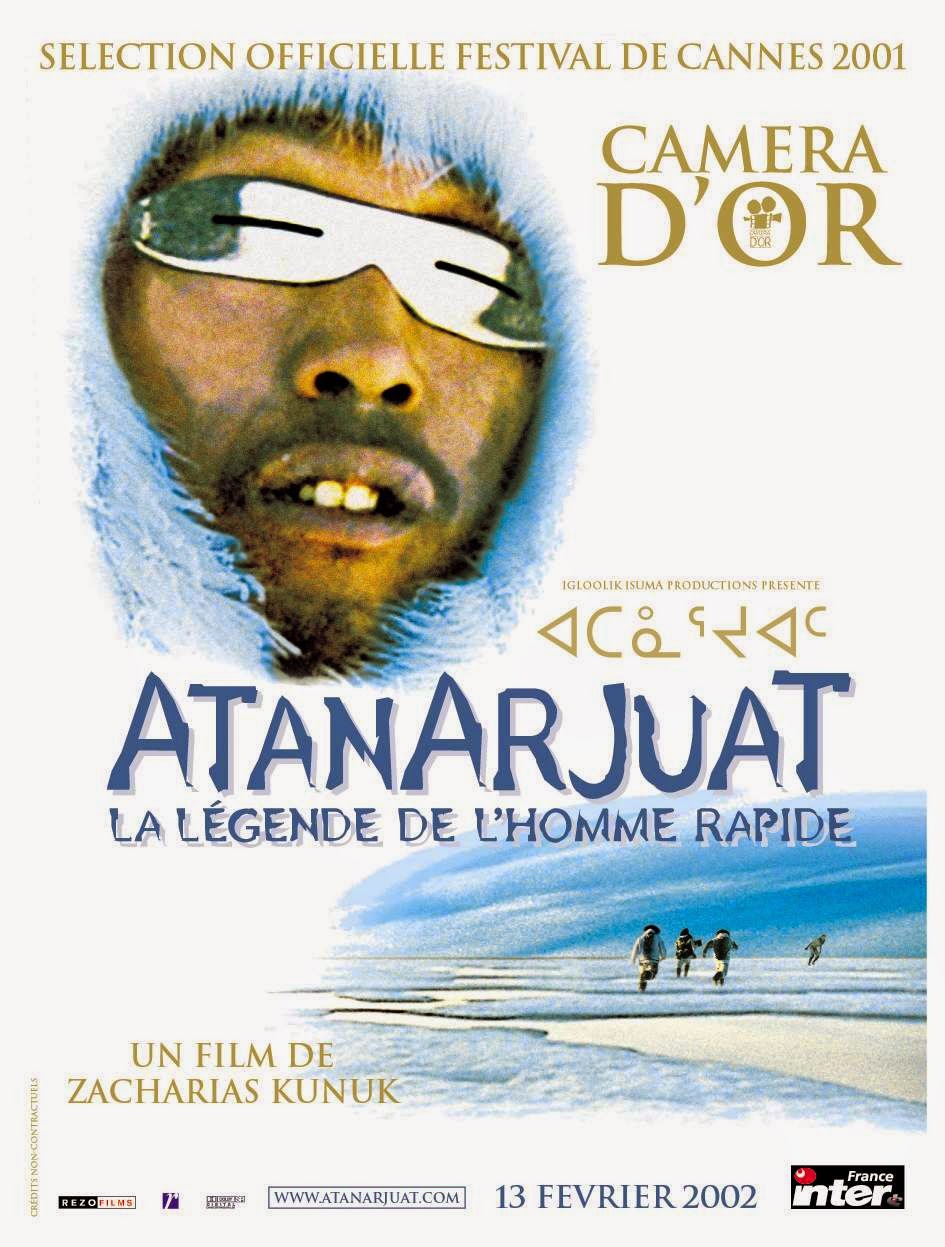
treated in cinema at that time. Since then, several films have been made that glorify native people and their culture, for example, Smoke Signals and The fast Runner. Although these two titles do not come close to showing what it's like to be Native American, they do give a glimpse. Grahm Green says this about The fast Runner, "This movie brought it top the point where cinema was telling our stories, our way." Of course not all stereo types will be erased with two or three movies.  Cinema is finally coming to the point where they will let Natives tell their story the way it should be told. Why tell it any other way?

Monday, February 9, 2015

the Opresser and the Opressed

There are many indicators of Tayo's hard life that cannot go unnoticed in the novel Ceremony. These  make him want to become invisible to the world and everything around him.  For Tayo, the best way become invisible is using large amounts of morphine. A great quote that emphasizes this is, "He wanted to go back to the hospital. Right away. He had to get back where he could merge with the walls and ceiling, shimmering white, remote from everything." Silko Pg. 32  He wants to go back to the hospital for the morphine and wants to merge with the walls to block himself out of everything that is happening to him and the pain
he is feeling. Tayo may not be suffering from the pain of P.T.S. either.  This quote shows how subtle racism was a big part of his life. "You know the army doctor said "no Indian medicine". Old man Ku'oosh will bring his bag of of weeds and dust." Silko Pg. 34 Tayo has much respect for Ku'oosh and everything he does. This quote speaks to the fact that Americans are trying to take culture away from the Native Americans. Incidents such as these happen to Tayo often which can have a big emotional impact of him. When so much happens to one person, it eventually makes them have the need to oppress others.  This is called 'Transfer of Oppression'.  In this quote, Auntie wants Tayo to talk to the medicine man. "You know what people will say if we ask for a medicine man to help him. Someone will say its not right they'll say he's not pure blood any way." Silko Pg. 33  Because Auntie is being treated unfairly and ridiculed about using a medicine man, she is almost sure people will do the same to Tayo.   Throughout the novel Auntie ridicules Tayo. It is sad to see, but anger and pain can create a domino affect for those around you and those you care about.


Humans will always escape from pain.  People will do what it takes to heal. In Tayos case, it seems to be nature that heals him. Every time he brings up the Baton death march, he will associate it with rain which causes him to feel uneasy. However, he also brings up other types of nature when talking to old man Koo'ush. "Then he
heard the old man describe a cave north east of laguna where bats flew out on summer evenings. The rattlesnakes liked to lie there in the early spring. The snakes went there to restore life to themselves." Silko Pg. 35 First of all, Tayo is talking about animals in this quote, which calms him. Second he has a cheerful spirit when talking about this cave. Some might say, "He can't just ignore what happened and think about nature!" but right after that quote Tayo says "He remembers the wide round hole, so deep that lying on his belly beside Rocky, he had never been able to see the bottom." Silko Pg. 35 Although the animals and such are making him feel calm, any type of nature he thinks about can somehow be related to the Baaton death march. Tayo tells him that he has never killed anyone in war yet is still sick. This is when the old man slows down and begins to understand what is really going on in Tayo's head. "The old man shook his head slowly an made a low humming sound in his throat. you couldn't  kill another human being in battle without knowing it without seeing the result because even a wonder deer that got and ran again left great clots or lung blood or spilled guts on the ground." Silko Pg. 36 Old man Ku'oosh is basically saying, even if he did not kill any one, just the participation in war can give emotional scars. The old man still has faith in Tayo because although he is lost at the moment, does not mean he can come back. The past is not equal to the future.

Wednesday, February 4, 2015

Invisibility by Drugs

On this journey Tayo is going through, there are many ways he learns to deal with his pain. He talks a lot about becoming invisible or disappearing from the world. That could be taken several different ways, it could go the rout of racism, or maybe

Monday, February 2, 2015

The Path to Healing


There are many grenades being thrown at Tayo's life in the beginning of Leslie Silko's, Ceremony. So many grenades that one may think he will never come out of this deep depression.  In fact some believe he is on a path to healing by telling stories. "You don't have anything, if you don't have stories. Their evil is mighty, but it can't stand up to our stories" Pg. 2 Silko. This statement says a lot. First of all, it touches on the evil of something out there.  However Tayo is also saying his stories demolish it. This quote summarizes how he feels at the end of the book, but not necessarily how he is feeling in the beginning of the book. Frightened and distraught from World War II "Japanese soldiers shouting orders to him, suffocating damp voices drifted out in the jungle steam." Silk Pg. 6  This statement was only a memory but even for the reader it feels real.  It is hard to imagine, but what Tayo is dealing with is a natural reaction to a traumatizing event in ones life. Tayo can most likely recall almost everything that happened when he was at war, especially the traumatic parts. One example is when he was carrying Rocky, he remembers the very rocks he was walking on. "The words of the story pouring out of his mouth as if they had substance, pebbles and stone extending to old the corporal up, to keep his knees from buckling." Silk Pg. 12 It is also interesting how he talks about telling a story to give strength. Although pain is riddled through out this book, from pain comes growth which is what will come next for Tayo


among the obvious themes in the book, there are subtle ones as well, like racism, classism, and alcoholism. this quote gives a subtle yet strong example of classism. for example there is a quote that says "She spent all day splashing down the summer rain, but her sister corn woman worked all day sweating in the sun, getting sore hands." Silko Pg. 13 This is a poem which has not been explained yet in the book however, as a metaphors it makes complete sense. One person looses so the other can win. Another interesting underlying theme in this novel is alcoholism. Tayo's friend Harley seems to be constantly drinking to solve his problems or at least subdue them. "Harley didn't use to like beer at all, and maybe this was something that was different about him now after the war. He drank lots of beer now." Silko Pg. 20 This quote makes an interesting point that even though he did not
use to drink at all, harley had been changed by the war. racism is also a big hidden factor to this book, ad there are many facts to prove it, for instance, when Tayo is talking about his school, he talks about basically intuiting him his own religion. "He had believed i  stories for a long time, until the teachers in indian school taught him not to believe in that kind of nonsense." Silko Pg. 19 it is astonishing how many themes are brought up through the pain this man is going through in this book. one may be able to feel for what he has been through because they have gone through it too. Even if they have not been through the same types of problems and issues one is sure to understand it.

Monday, January 26, 2015

the metaphors and cultures of Dances with Wolves

Two Socks is a wolf that the main character John Dunbar is befriending in the film Dances with Wolves. Above all, Two Socks represents several different metaphors in the movie. First of all, Dunbar's relationship with the Sioux Indians parallels his relationship with Two Socks. As Dunbar is creating a bond with this creature throughout the movie, he is also creating a bond with a Sioux tribe. These two bonds are very similar. For example, the first time Mr. Dunbar see's the wolf he immediately gets his gun and takes aim, but when he realizes it is only a wolf, he does not shoot. This shows a lot about his character. Mr. Dunbar is not only aware of his environment but cares about it. The same type of situation happens when he encounters the Sioux for the first time.  One of the first times Mr. Dunbar sees the Indian man, his first thought is to kill him.  However, he cannot bring himself to do it because of a rush of emotions flowing through him as the mysterious Indian man stands in front of him.  Instead he lowers his gun as the Indian screams and rides off into the distance on his horse. Dunbar is instantly intrigued.  Both characters are not yet sure why they didn't kill each other. Interestingly, the wolf comes around more often, because he is realizing that Dunbar is not a threat.  Dunbar offers the wolf a piece of food from his hand, and he takes it, then runs off. In order to offer food from his bare hand, Dunbar has to completely trust the wolf. In addition, as Dunbar grows closer and closer with the Suix tribe, the tribe had to completely trust him, in order to survive.  Sadly, the wolf is eventually killed by the American military while Dunbar is being held captive.  The tribe comes to rescue Dunbar, and he goes and lives with the tribe.  Just as the wolf would have always come back to him.


John Dunbar goes through a great transformation throughout the film. He slowly becomes one of the Sioux people, but at first he is very satisfied with his way of life. He is also very clueless about other cultures, as subtly shown in the movie, when he is getting ready to go to a Sioux village for the first time. Dunbar wears his formal soldier uniform to try to impress them. In reality, this only makes him look worse to the tribe because they're in conflict, if not warring with the soldiers.  Most of the soldiers don't just want to talk to the Sioux, they want to kill them. Although the tribe is weary of Dunbar, they decide to talk. As the tribe and Dunbar become closer, they show each other many new things about their ways of life. For instance, the tribe eventually teaches Dunbar how to speak their native language, and Dunbar teaches the Sioux people how to use a rifle. Although this may not be historically accurate, it is a good way to express what the two different cultures have to give to one another. Ultimately there is no "superior culture".   But the movie portrayed the white culture to be more brutal.  That is most likely why Mr. Dunbar decides to join the Sioux people. They are more peaceful people than the American military by far. For example, as the American soldiers were riding back to the camp to execute Dunbar, because they viewed him as a trader, the soldiers saw Two Socks and shot him in cold blood without thinking twice about it. The Sioux people would have had more of a respectful connection to the wolf and would not have killed it. In the end, Dunbar's beliefs are completely changed due to all his experiences with these people. In fact he is willing to sacrifice everything for them.


Sunday, January 18, 2015

Dancing With Wolves

One could say that Dancing with Wolves is a strong display of post dramatic stress, stratification of power and a lack of communication and understanding. The film shows many creative ways to depict these things. For example, Lieutenant Dunbar is on his horse looking into the distance as inspirational music plays. This happened multiple times throughout the film. It doesn't just happen with Dunbar either, there have been scenes of pathos on the Native American side as well. However, throughout scattered pathos scenes of Native Americans there are scenes of fear mis-communication and misunderstanding between cultures. For instance, there is a scene where Lieutenant Dunbar encounters a  Native American. It is obvious they are both scared of each other  most likely because of what each of there cultures have done to the other. Dunbar most likely sees the Native American to be a mysterious and deadly character. When in reality, he is just the same type of person as Dunbar. One thing that makes the two cultures different is their stratification of power. For the most part, the Native American warriors and elders are the leaders in their society.  This is shown in the scene when they were talking about what they should do with Dunbar. Interestingly, in the American military, the creators of this film decided to depict the leader to be a drunk, strange man who seemed unfit for his duty, however the Native Americans were depicted as wise. All these factors helped this film become a great visual tool to help people understand both sides of the story.

It could argued that before this movie, the American military is mainly depicted as the good side or the protagonist. Numerous people will not even acknowledge Native Americans and see them as bad or dumb people because of how Hollywood, for the most part, portrays them.  In the first scene of the film where  Native Americans are introduced, they are portrayed as brutal and savage. The Shawnee see a traveler and automatically kill and scalp him. This is an interesting point of view for someone who is seeing a Native American for the first time in the film. However, the film does not depict them as dumb, only savage. In a later scene, there is a group of Native American leaders sitting and talking about how they should proceed with Lieutenant Dunbar. This shows Native Americans did not just kill for fun, they have a mis-understanding of white mans' culture. A very bloody mis-understanding, American military came into several villages around that time and scalped woman and children as well.  In this film, costume shows cultural differences between people. For example, the Pawnee warriors are dressed up with all sorts of leather armor, headgear, face paint and other extremities. On the other side, Dunbar is dressing up with his sleek blue jacket, hat sward and golden cuff links. Dunbar might think he looks more civilized but really it is just a matter of perception. While Native Americans costume looks scary to us, a human probably looks just as scary to a lion.

Sunday, January 11, 2015

Lakota/Sioux


The traditional Lakota people lived mostly Wisconsin and the Dakotas. Some have moved to different places around the country, but there are many reservations still around that area. There are currently about 85,000 in the Lakota population, 20,000 of those people still speak the native language.  The Lakota people are known for being great hunters. the traditional way of hunting was on horseback. Their primary reason for hunting would be buffalo. for the propose of almost every thing. For instance a plethora of tools, shelter and of course food. However now, the american buffalo is almost extinct because of a combination of commercial hunting and slaughter in the 19th century.


Cheyenne/Arapahoe


The early Arapahoe indians lived in Colorado and cheyenne Wyoming. in the 1850s the Arapahoe divided up into two separate tribes; the Northern arapahoe and the southern arapahoe. Ever since then the Northern arapahoe have been living in Wyoming and the southern arapahoe now lie in Oklahoma.  Historically, these people were known for their agriculture and their warriors.  Although they did hunt buffalo, they were also corn farmers. This is something they became very good at. In the traditional Arapahoe culture, most young men would aim to become a warrior because they were the foundation their society. The warriors would usually paint their faces, mixing different plants to create different colors. this would give them the affect of looking more intimidating and it also showed prestige. 

Wichita tribe
The wichita people live mainly in Kansas, Oklahoma and Texas. Currently they have made an economic feat of 4.5 million from a casino, restaurant and smoke shop they own which is located in Oklahoma. The ancestors of the wichita people lived in Nebraska and spoke the caddoen language. They had huge houses made of hay which were spread out to about 20 per village. In some of these villages were mysterious places called "council circles" which are a central patio like structure and several subterranean structures. Archeologists are unclear to exactly what the porpoise of these are, but they think it might have something to do with the solstices. Many of the original wichita people were skilled in trading and negotiation. They traded with many other southern indian tribes. They would trade things like had made jewelry, clothing, tools and weapons. 


shawnee tribe

The shawnee people during the early 1700s were somewhat migratory people. They traveled from place to place, which is why they created a somewhat temporary living quarters known as tipis. Horses would carry them on there back as they traveled from place to place. Some of the places they stayed were; Ohio, Virginia, south Carolina, and Illinois. The shawnee people had many early encounters with colonists. One of the earliest was a dutch map that shows records of a shawnee canoes in the Delaware river. intact, canoes were used quite often by the shawnee and several other tribes. They would make them by cutting out the inside of a tree, this would painstakingly take months, however some could fit up to 15 people! Canoes were very helpful to the shawnee because water was no longer an obstacle, they could go almost where ever they wanted. 
Cherokee Nation                                                        trail of tears
The cherokee refer to themselves as "the principle people", however the actual name "cherokee may mean "Those who live in the mountains". The cherokee were one of the tribes involved in the trail of tears which was a series of forced migrations to a indian reservations. The cherokee at first stood there ground. However Winfield Scott, a U.S. army general commanded his troops to enforce the moving even harder. Interestingly enough the cherokee have there own language and verbally and written. The origins of the cherokee people come from 2 different places. The great lakes region and around the appellation mountains. As colonists began to have relationships with the Cherokee  and other tribes, they started to teach them english.
the appellation mountains (where the Cherokee once lived)